Ridgewood NY Residential Sales: Market Trends and Insights for 2026
Ridgewood NY residential sales entering 2026 reflect a maturing outer-borough market with sustained demand from both Brooklyn and Manhattan commuters. According to Walk Score, Ridgewood posts a Walk Score around 92, signaling strong appeal for car‑free households. Historic housing stock along streets such as Forest Avenue, Madison Street, and Seneca Avenue now mixes with newer condo conversions, while zoning near Myrtle Avenue and Fresh Pond Road guides future inventory. Understanding pricing, amenities, and financing conditions will be critical for competitive purchase strategies.
How is demand shaping Ridgewood NY residential sales in 2026?
Ridgewood draws buyers from both Queens and northern Brooklyn, particularly from Bushwick and Williamsburg, because of relative value differentials. According to Redfin, Ridgewood has seen listing inventory hover in the low double digits, often below 60 active homes at a time through late 2025. That limited supply supports competitive bidding for well‑renovated townhouses near Wyckoff Avenue and historic rowhouses close to Onderdonk Avenue, especially those within walking distance of the M train at Seneca Avenue.
On warm evenings along Myrtle Avenue near Gottscheer Hall, the glow from café windows spills across the sidewalk while the low murmur of conversations blends with the hiss of the espresso machines. The roasted coffee aroma from local spots like L’imprimerie mixes with the buttery scent drifting from Rudy's Bakery on Seneca Avenue. Streetlights reflect off the brick façades of prewar walk‑ups, giving the corridor an amber, almost cinematic atmosphere that continues to attract first‑time buyers from denser parts of Brooklyn.
Demand is not limited to buyers seeking primary residences. According to neighborhood pages on StreetEasy, rental listings in Ridgewood frequently receive multiple inquiries within the first 48 hours, signaling strong tenant interest. That rental depth encourages small investors to acquire two‑family homes along Madison Street and Harman Street, aiming for stable occupancy rather than speculative flips. In turn, competition between investors and owner‑occupants keeps contract activity brisk around Grover Cleveland Park and Rosemary’s Playground.
What price ranges and property types define Ridgewood NY residential sales?
Housing stock in Ridgewood includes attached brick rowhouses, semi‑detached two‑families, and a growing number of condominium conversions near Forest Avenue and Metropolitan Avenue. Based on current listings tracked by Zillow, many entry‑level one‑bedroom condos ask between $550,000 and $750,000, while larger two‑bedroom units can range from roughly $800,000 to $1,050,000. Classic railroad‑style two‑family houses on streets like Gates Avenue and Linden Street often command higher prices when delivered with updated mechanicals and finished basements.
According to StreetEasy, many closed sales for one‑ to three‑family houses in Ridgewood over recent years have fallen in a band between approximately $950,000 and $1,400,000, depending on renovation quality and proximity to subway lines. Properties closer to the M train at Forest Avenue or Fresh Pond Road often secure premiums over similar homes west of Onderdonk Avenue, where walks to stations extend by an additional 8 to 12 minutes. Historic blocks near the Onderdonk House also attract interest for architectural character.
Financing dynamics shape purchasing power in this corridor. According to HUD, FHA loans allow minimum down payments of just 3.5%, which can help first‑time buyers competing for condos around Wyckoff Avenue and Seneca Avenue. Conventional loan products with 20% down remain common for two‑family purchases near Grover Cleveland High School, where many buyers aim to offset mortgage obligations with rental income from a second unit.
How do transportation and amenities influence Ridgewood NY residential sales?
Transit connectivity plays a critical role in Ridgewood NY residential sales. The M train stations at Forest Avenue, Seneca Avenue, and Fresh Pond Road, along with the L train at Halsey Street and Myrtle‑Wyckoff Avenues, provide direct access to Midtown Manhattan and central Brooklyn. According to the Ridgewood page on Walk Score, the neighborhood’s Transit Score sits in the range of 74, reinforcing its status as a strong choice for commuters prioritizing subway access over car ownership.
Weekend afternoons at Grover Cleveland Park carry the rustle of tall trees and the rhythmic bounce of basketballs on the courts, while the grassy fields near Cypress Avenue smell faintly of cut grass and grilled food from nearby barbecues. Children’s laughter drifts across to the shaded benches, where the stone pathways feel cool underfoot even in late summer. The presence of the Ridgewood Reservoir and Forest Park a short bus ride away adds additional green relief to the dense masonry streetscapes.
Amenities along Myrtle Avenue, Fresh Pond Road, and Forest Avenue continue to support pricing resilience. According to neighborhood analytics compiled by StreetEasy, areas within a quarter‑mile of these commercial corridors show particularly low listing days‑on‑market, often under about 35 days in recent years. Restaurants such as Nowadays near Cooper Avenue, bakeries like Rudy’s Bakery, and long‑standing institutions such as Gottscheer Hall create an amenity base that reduces turnover and attracts buyers seeking an established, walkable lifestyle.
What role do schools and demographics play in Ridgewood NY residential sales?
School quality exerts increasing influence on Ridgewood NY residential sales, especially for buyers targeting long‑term stability. According to GreatSchools, P.S. 71 Ridgewood holds an overall rating around 8 out of 10, which helps support demand for housing near Grandview Avenue and 62nd Street. Other institutions such as I.S. 93 on Forest Avenue and Grover Cleveland High School on Himrod Street expand educational pathways, while nearby Maspeth High School further broadens options.
Demographic shifts show a blend of long‑time residents and newer arrivals from North Brooklyn and Manhattan. According to profiles from the New York City Department of City Planning, the wider Queens area has grown steadily, with population increases in the low single‑digit percentages over recent census cycles. This gradual expansion, combined with limited land for large‑scale new development in Ridgewood, supports a market where supply remains structurally constrained relative to household formation.
Language diversity and small‑business density also shape perceptions of value along Wyckoff Avenue, Cypress Avenue, and Metropolitan Avenue. According to business listings tracked by Zillow and other portals, mixed‑use buildings with ground‑floor retail and upper‑floor apartments perform particularly well on sales and rental pricing. Cafés, delis, and pharmacies within a 0.25‑mile radius of major intersections, such as Myrtle Avenue and Fresh Pond Road, increase day‑to‑day convenience and help stabilize occupancy, which in turn underpins pricing.
How should investors and end‑users navigate Ridgewood NY residential sales in 2026?
Strategic timing and financing decisions will remain central in Ridgewood through 2026. According to statewide tax research by the Tax Foundation, New York’s effective property tax rates generally sit below 2% of market value, with many New York City properties in practice closer to about 0.8% to 1.0%. That relative advantage supports long‑term hold strategies for multi‑family properties along Seneca Avenue, Forest Avenue, and Onderdonk Avenue, especially where stable rent rolls already exist.
Investors often compare projected rents with mortgage scenarios under different down‑payment structures. Based on loan parameters from HUD, leveraging FHA financing with 3.5% down can sometimes make sense for owner‑occupied two‑family purchases along Madison Street or Cornelia Street, where a tenant in one unit helps offset monthly expenses. By contrast, larger all‑cash or high‑equity acquisitions around the Ridgewood–Bushwick border near Wyckoff Avenue can position investors for faster closing timelines.
Data‑driven search strategies further refine outcomes. According to neighborhood monitoring on Redfin, contracts in Ridgewood frequently enter pending status within roughly 2 to 3 weeks after listing when priced near recent comparables. That compressed window rewards buyers and investors who maintain pre‑approval letters, updated proof of funds, and clear criteria for properties along key corridors such as Myrtle Avenue, Forest Avenue, and Fresh Pond Road, minimizing delays once an appropriate listing appears.
The 92 Walk Score cited at the start of this guide reflects more than simple convenience; it highlights a neighborhood where pedestrian access strongly reinforces long‑term housing demand. That figure from the opening underscores why limited inventory and well‑established amenities continue to support Ridgewood NY residential sales despite broader market fluctuations. The StreetEasy Ridgewood dashboard provides regularly updated insights into listing volume, pricing bands, and time on market for active and in‑contract homes. Buyers who register tailored listing alerts there and commit to touring qualified properties within 48 hours of activation before the late‑spring surge in May will typically secure earlier contract positions, while those delaying until summer often face tighter inventory, steeper competition, and fewer negotiable terms.
FROM OUR BLOG


Buying a Home in Brooklyn NY: Essential Tips for 2026
Buying a Home in Brooklyn NY: Essential Tips for 2026 Buying a home in Brooklyn NY in 2026 requires understanding a fast-moving market with limited inventory and strong demand. According to Zillow, the typical Brooklyn home value stood in the mid-$900,000 range as of late 2024, after several years o
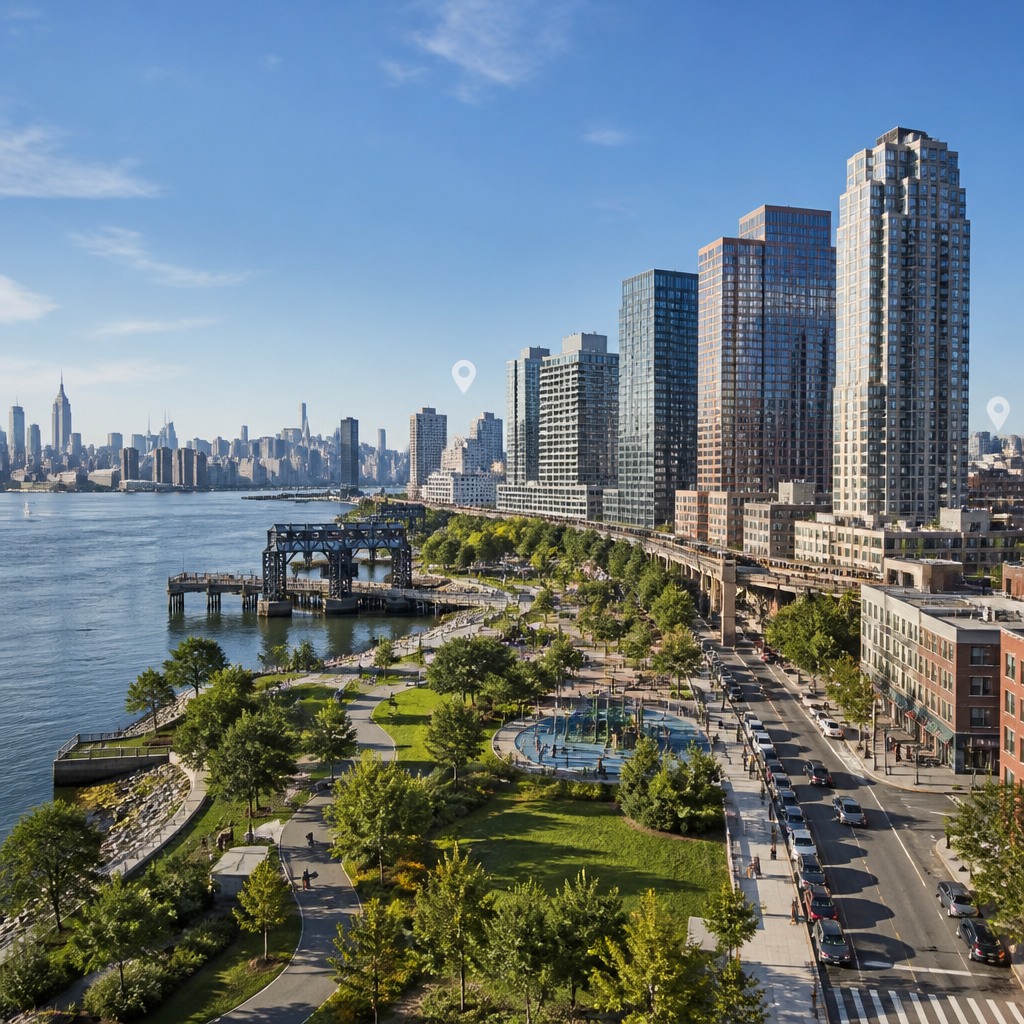
Discover the Best Apartments for Rent in Long Island City: 2026 Guide
Discover the Best Apartments for Rent in Long Island City: 2026 Guide Long Island City has transformed into one of New York’s most in-demand rental corridors, with sleek towers lining the East River and converted warehouses along Vernon Boulevard. According to StreetEasy, average asking rents for Qu
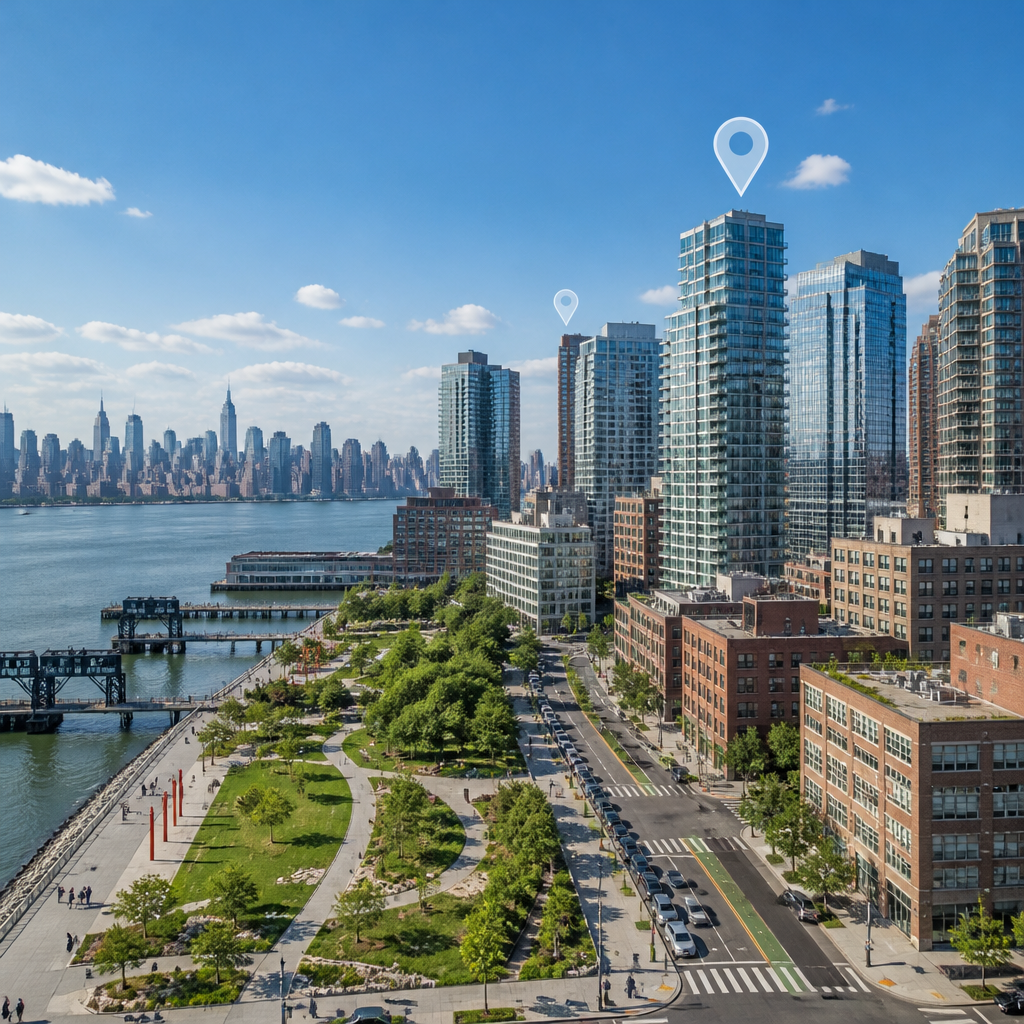
Your Ultimate Long Island City Neighborhood Guide: What to Know in 2026
Your Ultimate Long Island City Neighborhood Guide: What to Know in 2026 Long Island City in Queens has transformed from an industrial waterfront into one of New York City’s fastest-changing residential hubs. According to Niche, the neighborhood’s population has risen into the tens of thousands over